On this page
The arithmetic
Our multiplier rises by 0.1 per chained success and caps at ×4, which is reached at a chain of 31.
| Chain | Multiplier | A 10-point gate is worth | Cumulative from chain 1 |
|---|---|---|---|
| 1 | ×1.0 | 10 | 10 |
| 5 | ×1.4 | 14 | 60 |
| 10 | ×1.9 | 19 | 145 |
| 20 | ×2.9 | 29 | 390 |
| 31+ | ×4.0 | 40 | 775 |
The last column is the one that matters for decision-making. Losing a chain at 20 does not cost you 29 points — it costs you the difference between continuing at ×2.9 and restarting at ×1.0 across every remaining gate, which over another twenty gates is a few hundred points.
When to stop taking risks
There is a rough threshold and it is lower than most players assume.
Below about ×1.5, a chain is worth very little and a collectible or a risky line is usually worth taking. Above ×2.5, almost nothing is worth risking the chain — the multiplier applied to the gates you are about to fly exceeds anything a single pickup can offer.
- ×1.0 – ×1.5: take the collectible; you have little to lose.
- ×1.5 – ×2.5: take it only if the line is one you would fly anyway.
- ×2.5 and above: fly the safe line and ignore everything else.
The exception is a shield, which protects the chain rather than competing with it. A shield is worth a detour at any multiplier.
Rebuild cautiously
The instinct after losing a chain is to play aggressively to make the loss back. It is precisely wrong.
A fresh chain is cheap to start — the first few links are worth almost nothing — and expensive to lose again, because each break costs you all the compounding you would have had. The correct response to a break is a conservative rebuild: safe lines, no collectibles, no marginal centres, until the multiplier is meaningful again.
This is where a lot of otherwise good runs end. The player crashes at ×3, feels the loss, flies the next thirty seconds far more aggressively than usual, and crashes again at ×1.4 having gained nothing.
What breaks a chain here
Consistently across the site: a crash breaks a chain, and in collectible games a long enough gap in activity does too.
Missing a collectible does not break a chain. That is deliberate — breaking on a miss would punish you for correctly declining a bad line, which is the opposite of what a consistency reward should do.
The timeout exists only where a chain could otherwise represent a total rather than a streak. In Feather Dash, without it you could collect one feather, fly carefully for two minutes, collect another, and still be chaining.
Combos and tilt
There is a behavioural pattern around multipliers that is worth naming, because recognising it is most of the cure.
Losing a large chain produces a measurable change in how people play for the next thirty to sixty seconds: more aggressive lines, more collectibles taken, shorter deliberation. It is the same pattern gamblers show after a loss, and it reliably makes the next run worse.
The counter is a rule you set in advance rather than a decision you make in the moment. After losing a chain above ×2.5, fly the next ten gates on the safest available line and take nothing. By the time those ten are done, the emotional component has passed and the multiplier is already rebuilding.
Key takeaways
- The multiplier rises 0.1 per success and caps at ×4 at a chain of 31.
- Losing a chain costs the compounding across every remaining gate, not the single gate you were on.
- Above roughly ×2.5, almost nothing is worth risking the chain — except a shield, which protects it.
- Rebuild cautiously after a break; aggressive rebuilding is where most otherwise good runs end.
Frequently asked questions
What is the maximum multiplier?
Does missing a collectible break my chain?
Should I play more aggressively after losing a chain?

Alex Morgan
Browser Games Editor & Interactive Gaming Content Specialist
Alex Morgan is the editorial byline for everything published on Flappy Arcade — the design notes, the flight-model tuning and the strategy guides for all 30 games. More about our editorial byline.
Published · Last updated
Games mentioned in this guide
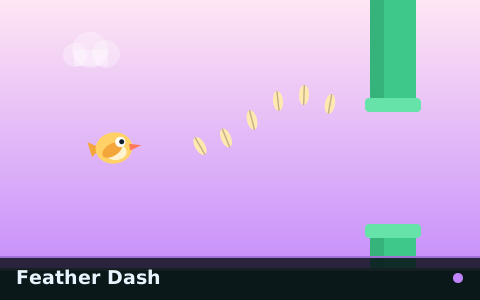
Feather Dash
Feathers appear on lines that are slightly worse than the safe one. Hit the quota and the next quota is larger.

Wing Master
Scores how well you flew, not just whether you survived. The centre band of every gate is worth chasing.

Ultimate Flappy Challenge
Four stages, each with its own objective, layered on top of each other. The hardest game here, and the most specific about why you failed.