AdventureNew
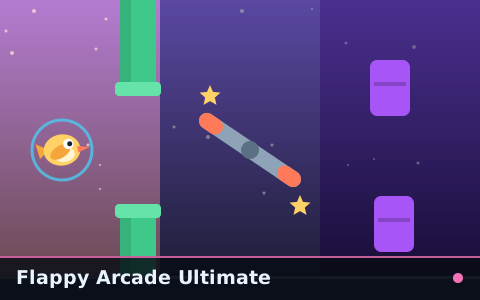
Flappy Arcade Ultimate
Three skies, three obstacle sets, power-ups, collectibles, a difficulty selector and a boss gate at the end of it.
Latest additions
Every game on the site ordered by the date it was actually published — newest first. These are real publication dates from our content records, not a rotating "new" badge.
Three skies, three obstacle sets, power-ups, collectibles, a difficulty selector and a boss gate at the end of it.

Four stages, each with its own objective, layered on top of each other. The hardest game here, and the most specific about why you failed.

A thruster you hold instead of a flap you tap. Altitude becomes continuous, and fuel makes it finite.
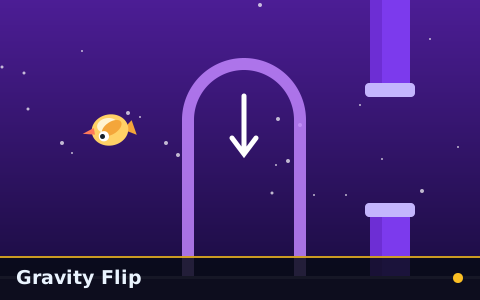
Fly through a flip gate and down becomes up. Your controls do not change — everything else does.
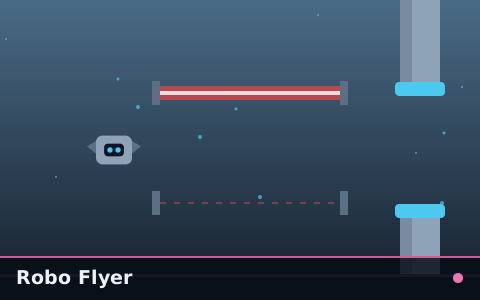
Energy beams that switch on and off on fixed cycles. The safe route is a moment rather than a place.

Almost no drag. Momentum carries far past the flap that caused it, and every correction arrives late.
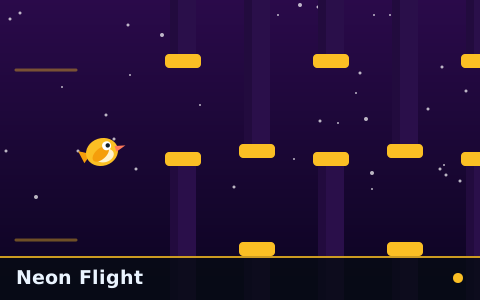
Fast from the first gate, with obstacles packed into sequences that leave almost no recovery room.

The balloon rises on its own. Your button vents it downward — every instinct you have is now wrong.

Three stages of escalating gate patterns, then a shutter that closes on a rhythm you have to time, not react to.
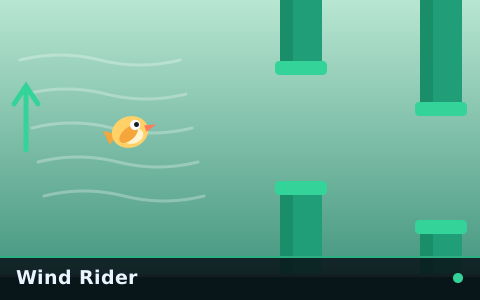
A vertical wind field that changes every few seconds. The rhythm that held your height a moment ago no longer does.
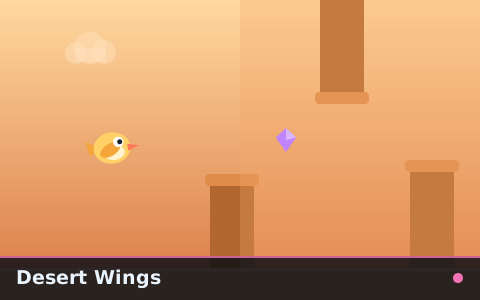
Sandstorm gusts push you sideways as well as up. Gems are buried in the worst of it.

Cloud Runner's corridor, tighter and faster, in a tunnel that keeps closing in. Relentless, but never hidden and never unflyable.
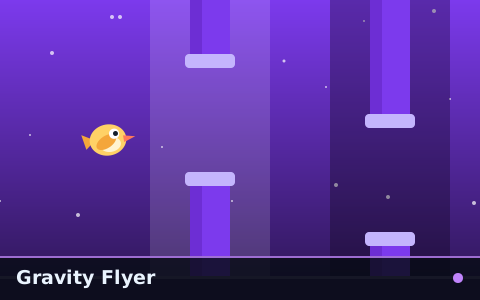
Coloured zones change how heavy you are. Same button, same gates, three completely different flight models.
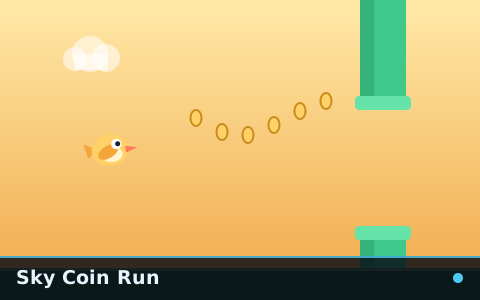
Every gate has two routes: the safe one and the one with the coins on it. They are rarely the same route.
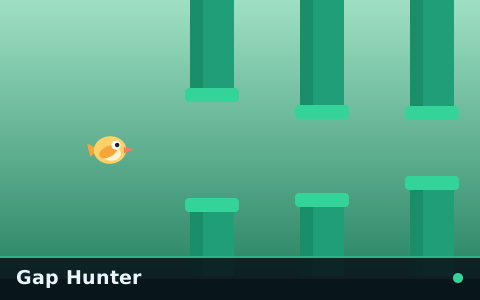
The openings shrink with every gate you pass. They stop shrinking at a width that is genuinely passable — eventually.
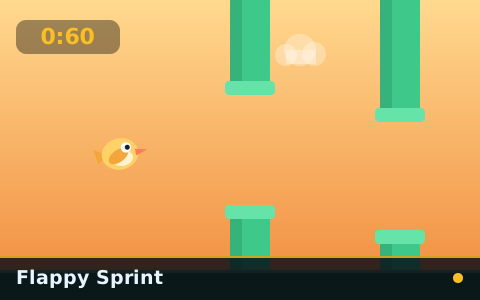
Sixty seconds, no more. Every attempt costs exactly one minute, which makes trying again almost free.

Weak gravity, heavy drag and a long, slow response to every stroke. The same game at a completely different tempo.
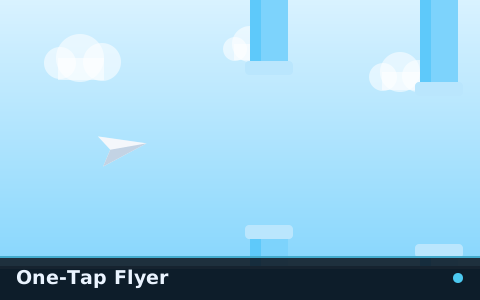
The gentlest game on the site. A floaty paper plane, wide spacing and enough time to see every decision coming.
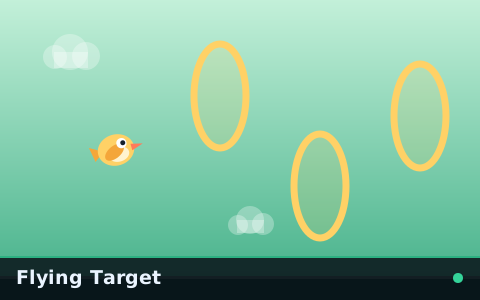
There is nothing to avoid. There are only rings to fly through, and missing one costs you.
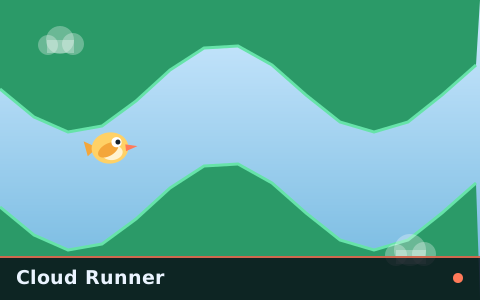
A continuous cloud corridor with no discrete gates. The walls never stop moving and neither can you.

No score, no combo, no bonuses. Just distance — a quieter endless run measured in metres rather than points.

Gates that move once, mid-approach, after flashing a warning. A pure test of how fast you can change a plan.

Vines hang from the canopy at irregular lengths and spires rise from the floor. Familiar physics, unfamiliar shapes.
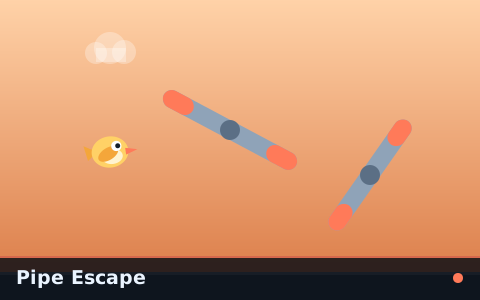
Rotating bars instead of pillars. The opening is always there — it just is not always where you are.
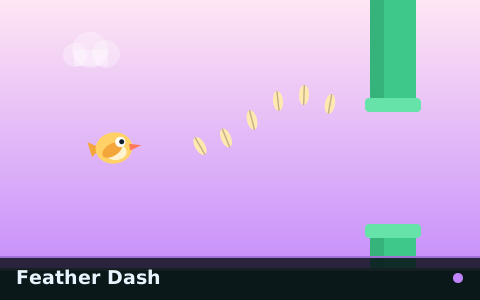
Feathers appear on lines that are slightly worse than the safe one. Hit the quota and the next quota is larger.
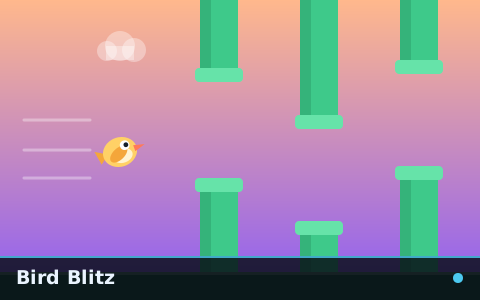
Starts where Flappy Flight finishes. A fast endless run with a speed ramp that never lets the rhythm settle.
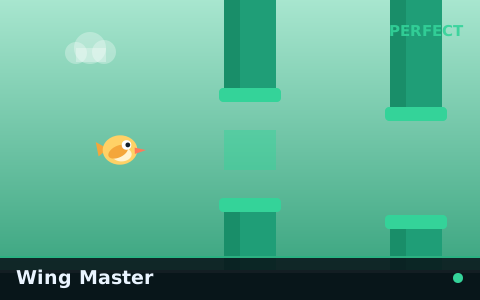
Scores how well you flew, not just whether you survived. The centre band of every gate is worth chasing.
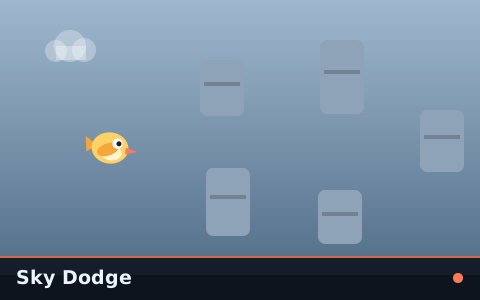
No gates at all. Free-floating barriers drift up and down, and you have to aim at where they will be.
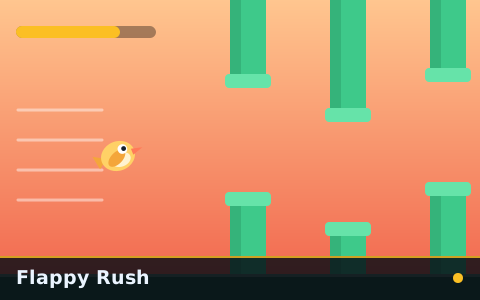
Starts readable and ends somewhere your rhythm cannot follow. A pure speed ramp with a visible speed meter.
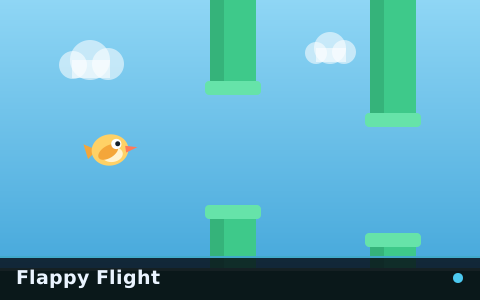
The reference flappy game: one flyer, one gap type, a speed that keeps climbing and nothing else in the way.
Games get balance changes when playtesting shows a problem — a difficulty spike, a control that does not read clearly, a mechanic arriving too early. When that happens the game page and any guide that quoted the old numbers are both revised, and both dates change.
The architecture is built so that adding a game means one game module, one metadata record and one thumbnail — the category pages, the search index, the related-games links and the sitemap all update automatically. That is deliberate: the library is designed to scale well past thirty titles.
Our guide on designing a good flappy-style arcade game describes the process each new title goes through before it appears here, including the four playtest targets every game has to hit.