Endless
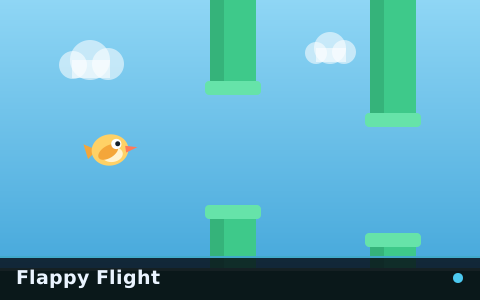
Flappy Flight
The reference flappy game: one flyer, one gap type, a speed that keeps climbing and nothing else in the way.
Play Free Flappy-Style Arcade Games Online
Fly. Dodge. Score. Repeat. Thirty original flappy-style arcade games you can play instantly in your browser — endless flying, obstacle courses, reflex tests, precision challenges and themed adventures. No download, no account, no waiting.

Flappy Arcade is a collection of fast, accessible flappy-style games for players who enjoy flying, obstacle avoidance, reflex challenges, precision flying and chasing a score that is genuinely their own.
Every game here works the same way at its core: one input, constant gravity, and an obstacle field that arrives whether you are ready or not. What changes between them is what that core is asked to do — thread a narrowing gap, predict a drifting barrier, time a closing shutter, hold a line through a corridor, or manage four objectives at once.
All thirty games were designed, coded and tuned in-house. That is unusual for a free game portal and it is the reason the guides on this site can tell you that gravity is 1,500 units per second squared or that a shield absorbs exactly one collision — we chose those numbers. Start with the full library, browse by category, or read what flappy-style arcade games actually are if you want to understand the genre first.
Editor's picks
The eight titles we point new players at first — one from every kind of challenge on the site.
The reference flappy game: one flyer, one gap type, a speed that keeps climbing and nothing else in the way.
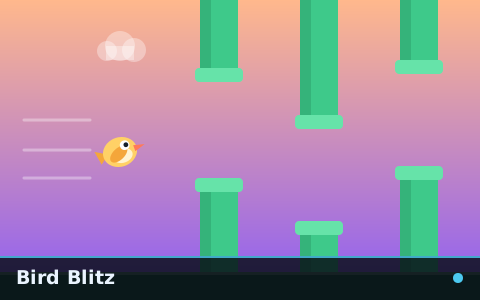
Starts where Flappy Flight finishes. A fast endless run with a speed ramp that never lets the rhythm settle.
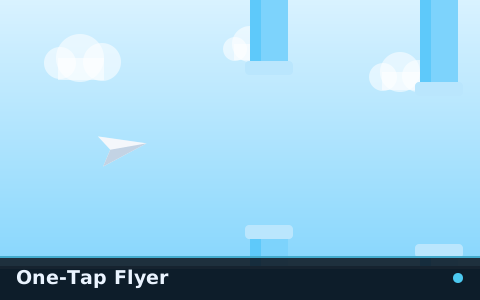
The gentlest game on the site. A floaty paper plane, wide spacing and enough time to see every decision coming.
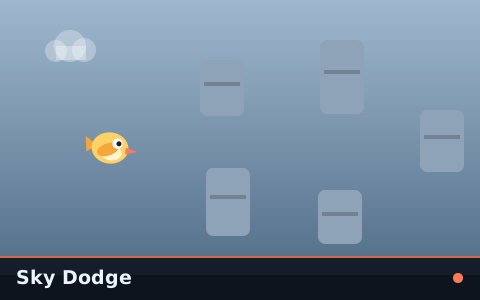
No gates at all. Free-floating barriers drift up and down, and you have to aim at where they will be.
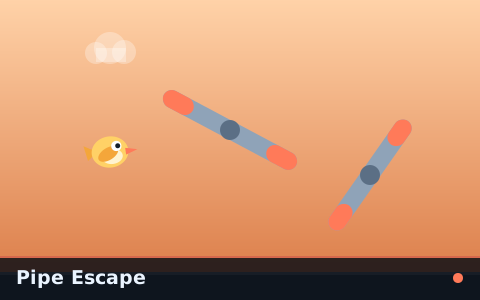
Rotating bars instead of pillars. The opening is always there — it just is not always where you are.

Three stages of escalating gate patterns, then a shutter that closes on a rhythm you have to time, not react to.
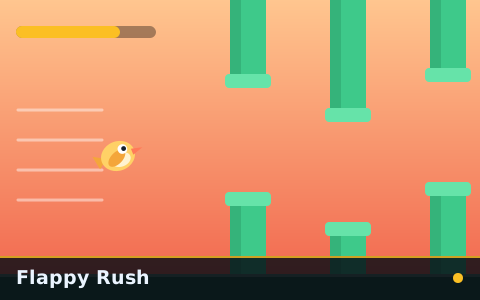
Starts readable and ends somewhere your rhythm cannot follow. A pure speed ramp with a visible speed meter.

Gates that move once, mid-approach, after flashing a warning. A pure test of how fast you can change a plan.
Browse by challenge
Six categories, each testing something genuinely different — rhythm, prediction, reaction, accuracy, objectives or adaptation.
Infinite obstacle sequences, rising difficulty and no finish line. Your score is how long you kept it together.
5 gamesGates, rotating bars, drifting blocks and shifting corridors. Games built around what is in the way.
5 gamesFast obstacles, short warning windows and sudden changes. Games that measure how quickly you convert sight into input.
5 gamesNarrow gaps, controlled altitude and lines that have to be exact. Accuracy rather than speed.
5 gamesObjectives, timers, collectible targets and combo chains. Flying with something specific to achieve.
5 gamesThemed environments, stage progression, collectibles and a flagship run that changes as you go.
5 gamesJust added
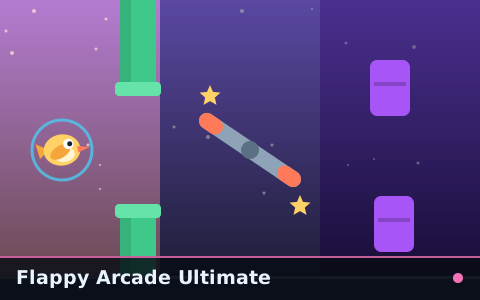
Three skies, three obstacle sets, power-ups, collectibles, a difficulty selector and a boss gate at the end of it.

Four stages, each with its own objective, layered on top of each other. The hardest game here, and the most specific about why you failed.

A thruster you hold instead of a flap you tap. Altitude becomes continuous, and fuel makes it finite.
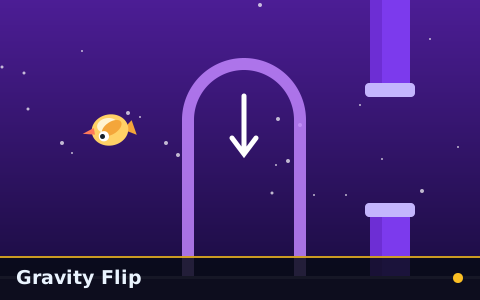
Fly through a flip gate and down becomes up. Your controls do not change — everything else does.
Endless
Infinite obstacle sequences, difficulty that climbs toward a ceiling, and a score that measures how long you kept it together.
The reference flappy game: one flyer, one gap type, a speed that keeps climbing and nothing else in the way.
Starts where Flappy Flight finishes. A fast endless run with a speed ramp that never lets the rhythm settle.

No score, no combo, no bonuses. Just distance — a quieter endless run measured in metres rather than points.
The gentlest game on the site. A floaty paper plane, wide spacing and enough time to see every decision coming.
Obstacle
Rotating bars, drifting blocks, closing shutters and continuous corridors — games where the thing in the way is the whole idea.
No gates at all. Free-floating barriers drift up and down, and you have to aim at where they will be.
Rotating bars instead of pillars. The opening is always there — it just is not always where you are.
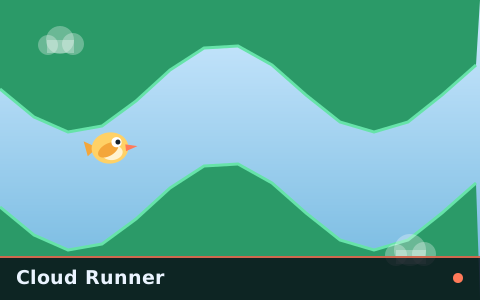
A continuous cloud corridor with no discrete gates. The walls never stop moving and neither can you.

Cloud Runner's corridor, tighter and faster, in a tunnel that keeps closing in. Relentless, but never hidden and never unflyable.
Reflex
Speed, density and changes that happen after you have already committed. Every warning is short; none of them are absent.
Starts readable and ends somewhere your rhythm cannot follow. A pure speed ramp with a visible speed meter.
Gates that move once, mid-approach, after flashing a warning. A pure test of how fast you can change a plan.
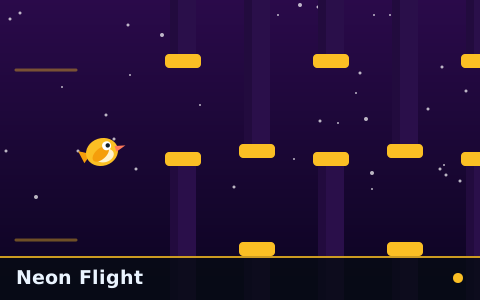
Fast from the first gate, with obstacles packed into sequences that leave almost no recovery room.
Fly through a flip gate and down becomes up. Your controls do not change — everything else does.
Precision
Narrow gaps, centre-band scoring and altitude held rather than corrected. Accuracy rather than hurry.
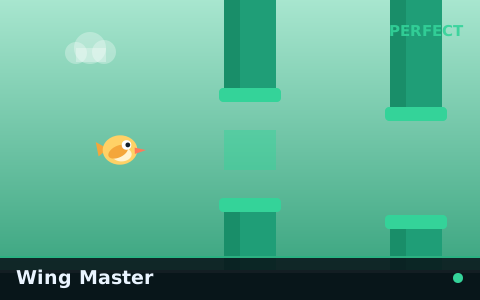
Scores how well you flew, not just whether you survived. The centre band of every gate is worth chasing.
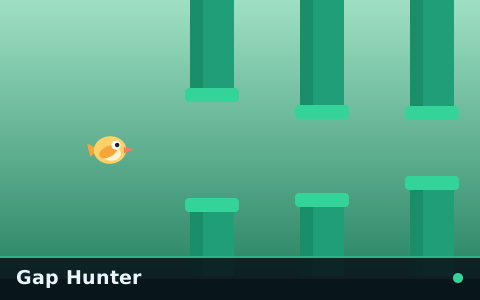
The openings shrink with every gate you pass. They stop shrinking at a width that is genuinely passable — eventually.
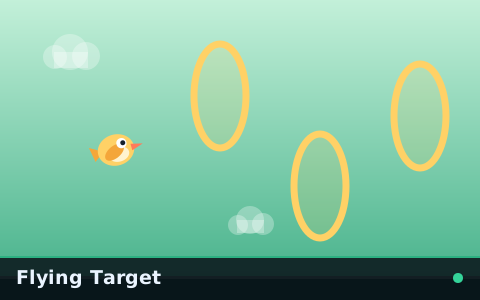
There is nothing to avoid. There are only rings to fly through, and missing one costs you.
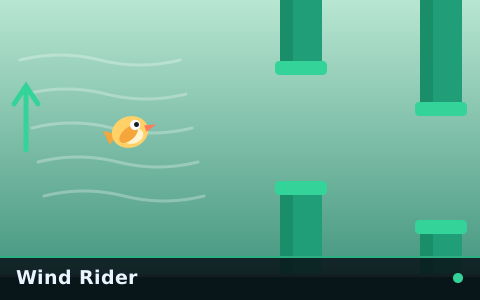
A vertical wind field that changes every few seconds. The rhythm that held your height a moment ago no longer does.
Challenge
Quotas, timers, combo chains and missions. Flying with something specific to achieve rather than simply surviving.
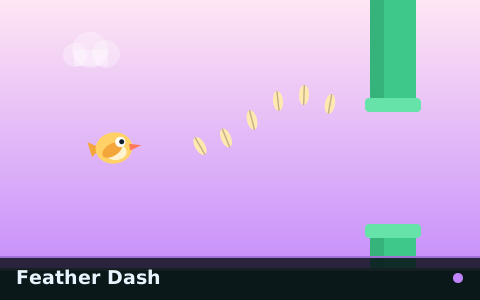
Feathers appear on lines that are slightly worse than the safe one. Hit the quota and the next quota is larger.
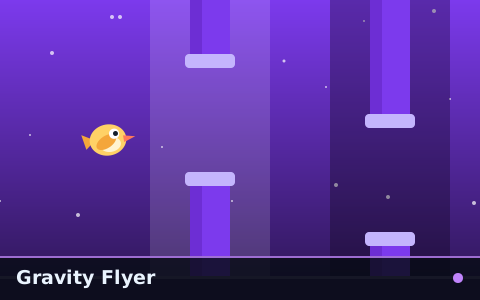
Coloured zones change how heavy you are. Same button, same gates, three completely different flight models.

The balloon rises on its own. Your button vents it downward — every instinct you have is now wrong.
A thruster you hold instead of a flap you tap. Altitude becomes continuous, and fuel makes it finite.
Adventure
Themed environments that change the flight model itself — water, ice, sandstorms, robotics bays and three-sky flagship runs.

Vines hang from the canopy at irregular lengths and spires rise from the floor. Familiar physics, unfamiliar shapes.
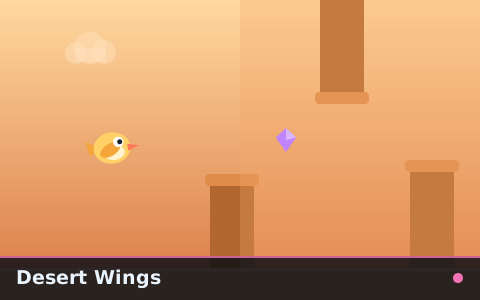
Sandstorm gusts push you sideways as well as up. Gems are buried in the worst of it.

Weak gravity, heavy drag and a long, slow response to every stroke. The same game at a completely different tempo.
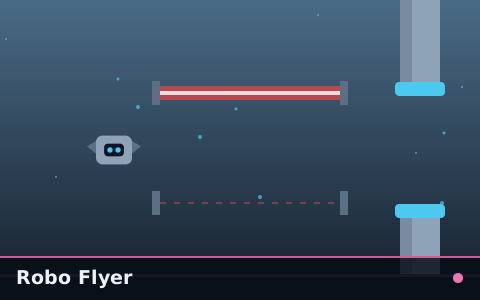
Energy beams that switch on and off on fixed cycles. The safe route is a moment rather than a place.
Why here
We build the games ourselves, which is unusual for a free game portal and is the reason everything else on this list is possible.
Every game starts in under a second. No installer, no plugin, no launcher — the page loads and you press Start.
The whole play area is the flap control, so there is no joystick covering the screen and nothing to aim at.
Endless, obstacle, reflex, precision, challenge and adventure. Each trains a genuinely different skill.
No accounts, no email, no server. Favourites and best scores live in your browser and stay there.
Fifty guides written by the people who tuned the games, quoting the actual numbers rather than restating instructions.
Every game, character, obstacle, sound and article was made for this site. No licensed content, no borrowed assets.
Every flappy-style game rests on three things: one input, a constant downward force, and an obstacle field that scrolls toward you at a rate you do not control. Understanding what each of those actually does is most of the difference between a twenty-second run and a two-minute one.
A flap does not set your position — it sets your vertical velocity to a fixed value. That means the same input produces a dramatic rescue when you are falling fast and almost nothing when you are already rising. Skilled play is mostly about the flaps you did not make, which is why flapping more is rarely the answer to anything. Our guide on why timing matters covers the adjustment in detail.
Gaps are not placed randomly. Each new opening is chosen relative to the previous one, within a band the flyer can actually reach in the time the current scroll speed allows, and never closer than a fixed margin to the ceiling or floor. Those two rules mean the field cannot produce a sequence that is physically impossible to fly. See how endless arcade games generate obstacles for the full method.
One event, one score: a gate passed, a ring threaded, a collectible taken. On top of that sits a combo multiplier that rises with consecutive successes and resets on a crash — a consistency reward rather than a speed reward, which is why careful flying usually out-scores aggressive flying. Several games add a perfect-pass bonus for threading the centre of an opening, which turns every gate into feedback about how well you flew rather than only whether you survived.
Gaps shrink toward a floor, speed rises toward a ceiling and spacing tightens — all on exponential curves rather than straight lines. About half of the total change has happened within twenty seconds, and past roughly ninety seconds the game has stopped getting harder and is simply holding its hardest state. That is deliberate: a run should end because concentration slipped, not because a threshold was crossed. How arcade difficulty progression works explains why.
Eight habits that raise scores across every game on this site, in rough order of how much they are worth.
If you would rather work through this properly, the guide on improving your flappy arcade score includes a three-run diagnostic that identifies which single error is currently costing you the most.
Get better
Fifty guides on flight mechanics, obstacle generation, scoring and technique — written by the people who tuned these games.
Cornerstone Guide
What actually defines a flappy-style arcade game, where the format came from, why one input is enough, and how the six kinds of flappy game differ.
Cornerstone Guide
The machinery underneath a flappy game: the flight model, the game loop, obstacle generation, collision, scoring and the difficulty curve — with the numbers we use.
Cornerstone Guide
Which flappy game to play depending on what you actually want — a first game, a hard one, a calm one, a short one, or something that plays nothing like the rest.
Cornerstone Guide
Why the same flap produces completely different results depending on when you make it, what lead time actually is, and how to fix the two timing errors that end most runs.
Cornerstone Guide
What avoidance actually asks of a player, the four obstacle families and the different skills they test, and why reading two obstacles ahead changes everything.
Cornerstone Guide
A structured way to get better rather than a list of tips: what actually limits your score, how to diagnose it in three runs, and what to practise in what order.
Flappy-style games are defined by three things: a single input that produces an upward impulse, a constant downward force so that doing nothing is itself a decision, and an obstacle field that scrolls toward you at a rate you do not control. Everything else — collectibles, power-ups, moving obstacles, environments — is a variation on that core. Our complete guide covers the format and its six main types.
Yes. All thirty games are free to play with no account, no trial and no paid content. There are no in-app purchases anywhere on the site — the coins, stars and gems in our games are decorative score items inside a single run.
No. Every game runs directly in your browser using HTML5 canvas. There is no installer, no plugin and no app. The page is the game.
Yes, and arguably better than on a desktop. Because there is only one input, the entire play area is the control — there is no virtual joystick covering the screen and nothing to aim at. See our mobile guide for the differences that do exist.
Your best result for each game is stored in your browser using local storage, on your device only. There is no account and nothing is uploaded. Clearing your browser data clears your scores.
No. This is a static site with no server, so a submitted score could not be verified — and a browser game's score is computed on the player's own machine, which means an unverified leaderboard would be a list of numbers people chose to send. We show your own best instead and say so clearly.
Flappy Flight is the most representative starting point. If the genre has ever felt unfair, start with One-Tap Flyer instead — it gives you roughly twice as long to act on every decision. If you only have a minute, Flappy Sprint is exactly sixty seconds.
The format itself is: one button, no reading required, no violence, no chat, no accounts and no purchases. The only caveat is difficulty — start with One-Tap Flyer or Jungle Flyer rather than the expert titles.
Every game, character, obstacle, sound effect and article on this site was created for Flappy Arcade. There are no image or audio files in the project at all — artwork is drawn from geometric primitives at run time and sound is synthesised from oscillators. We are not affiliated with any existing commercial flappy game.
No, and they do not try to. There is no lift, airspeed, stall or air density anywhere in the genre — a flap sets vertical velocity to a fixed number. Where our guides use words like gravity or drag, they describe arcade mechanics that carry those names. Our fact-checking policy covers the distinction.
Thirty games is enough that picking one can be its own problem. The full library can be filtered by category, difficulty, play type and mechanic; new games lists everything by publication date; and popular games is an editorial selection with an honest note about what "popular" can and cannot mean on a site with no analytics.
If you would rather not choose, random game picks one for you, and the best flappy games to play online sorts the library by what you actually want from a session — a first game, a hard one, a calm one, or something that plays nothing like the rest.