On this page
The telegraph window
Every fair reflex challenge has a telegraph: a signal that something is about to change, arriving before the change itself. The length of that window is the single number that decides whether a mechanic is demanding or unfair.
| Window | Effect | Example on this site |
|---|---|---|
| Under 150 ms | Below reaction time — effectively no warning | Not used |
| 250–350 ms | Demanding but achievable | Sky Reflex gate shift (280 ms) |
| 0.5–1 s | Comfortable; tests planning more than speed | Ice Flyer icicle crack |
| 2 s+ | A pacing cue rather than a reflex test | Desert Wings sandstorm haze |
Below about 150 milliseconds you are inside the sum of perception and execution time, which means the player physically cannot respond. A mechanic in that range is not difficult; it is a coin flip, and players detect the difference instantly.
Redundant signalling
A telegraph that only works for some players is not a telegraph. Ours are always delivered through at least two channels.
The gate shift in Sky Reflex is a brightness flash plus a distinct sound — not a colour change. A colour-only warning fails for players with colour vision deficiencies and also fails in peripheral vision, which is where most players are actually looking.
Beams in Robo Flyer glow before they fire and then ramp on over 0.12 seconds, which means there is both a visual precursor and a physical margin: a beam below half power is not yet lethal.
Recognition beats reaction
The best reflex games are not really speed tests. They are recognition tests wearing a speed costume.
Neon Flight draws from five hand-built sequences. For the first twenty runs it is chaos; somewhere around the thirtieth, the sequences start arriving as shapes rather than as individual gates, and players describe the game as having slowed down. It has not. Their decision stage has collapsed, which removes the largest of the three components of reaction time.
That is why authored patterns make hard games fair. A purely random field at expert speed would be a pure execution test, and execution is the component that does not improve.
What makes a reflex mechanic feel cheap
- No warning at all. The player learns nothing and correctly feels cheated.
- Warning conveyed by colour alone. Fails for a substantial minority and in peripheral vision.
- A telegraph shorter than reaction time. Technically warned, practically not.
- Randomised cycles. A timed hazard that cannot be counted cannot be learned, which makes practice worthless.
- Changes after the point of no return. If the player can no longer act, changing the situation is punishment rather than challenge.
None of those are used anywhere on this site. That is not a claim about quality — it is a constraint we work inside, and it rules out several mechanics that would otherwise have been easy ways to make a game harder.
Sound as a reflex channel
Audio is the most underused warning channel in browser games, largely because designers assume sound will be off.
It often is, which is why nothing on this site depends on it. But when it is on, an audio cue arrives through a completely separate channel from vision and does not compete for the place you are looking. That makes it unusually effective for warnings — you can be watching the entry edge of the screen and still catch a gate-shift cue happening in the middle.
The practical advice for players is simple: if you are working on a reflex game, turn the sound on. Several of our warnings pair a visual signal with a distinct tone, and using both channels measurably shortens the perception stage.
Key takeaways
- The telegraph window decides whether a reflex mechanic is demanding or unfair; below ~150 ms it is a coin flip.
- Warnings must use at least two channels — never colour alone.
- Good reflex games are recognition tests, which is why authored patterns make expert difficulty fair.
- A timed hazard with a randomised cycle cannot be learned, which makes practice worthless.
Frequently asked questions
How much warning is enough?
Why are your warnings never colour-only?
Are timed hazards random?

Alex Morgan
Browser Games Editor & Interactive Gaming Content Specialist
Alex Morgan is the editorial byline for everything published on Flappy Arcade — the design notes, the flight-model tuning and the strategy guides for all 30 games. More about our editorial byline.
Published · Last updated
Games mentioned in this guide

Sky Reflex
Gates that move once, mid-approach, after flashing a warning. A pure test of how fast you can change a plan.
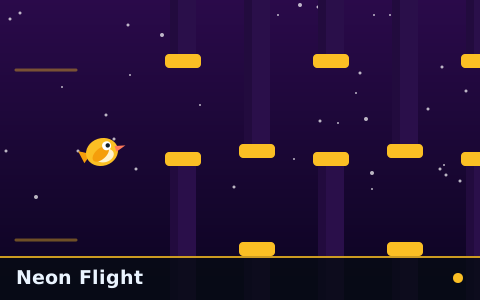
Neon Flight
Fast from the first gate, with obstacles packed into sequences that leave almost no recovery room.

Flappy Rush
Starts readable and ends somewhere your rhythm cannot follow. A pure speed ramp with a visible speed meter.
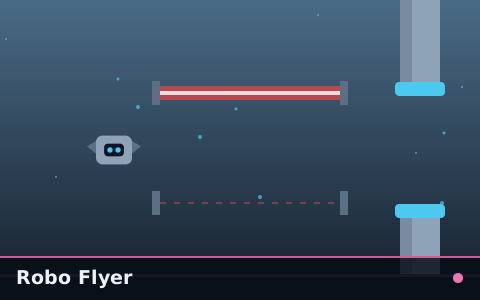
Robo Flyer
Energy beams that switch on and off on fixed cycles. The safe route is a moment rather than a place.